Street Y’art
A New Year party design project
Festival
Once upon a time, we got a call from our colleagues from Brooke Event Engineering. They wanted to discuss a non-trivial task: street art festival-style event design.
A dream project. A project that we both love and hate to bits.
Today we will tell you a story of Yandex New Year event decoration.
Concept
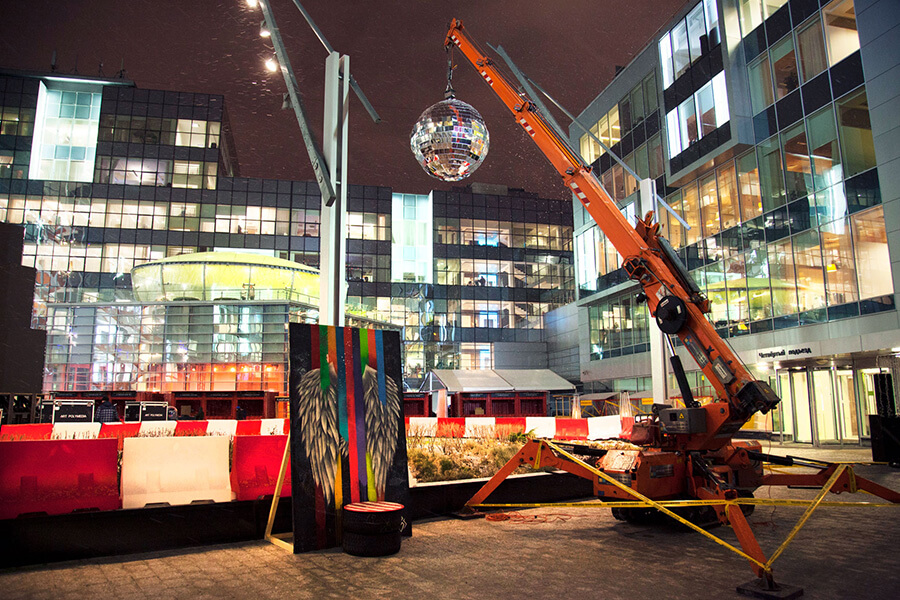
The event was held in the courtyard of the head office, Lev Tolstoy street. There were about 3500 participants.
After a long brainstorm session, our team came up with ideas for about 50 objects of art and installations. We sieved through them again, edited and made visual concepts and sketches.
Design elements were adapted and got manuals that helped local offices to change the scale for their needs. The celebration itself was held across several cities simultaneously.
Street
Street art concept is fairly broad; it includes a massive historical and multicultural background, a whole variety of facets, flows and genre: graffiti, installations, music, fashion style. And it keeps growing and evolving all the time!
It’s temporary. Non-permanent. Ever so slightly subjective at times. Popular and shunned at the same time.
It’s forms of art that are nothing that we, spectators, are used to. Somewhat surreal, but truly beautiful; permanently rebellious and challenging.
That sounds like something we like doing every day.
Disco ball
The true history of disco ball invention is vague — we can only imagine that its forefather was some movie prop. It persisted through the years, only gaining in fame, and became an essential part and symbol of discos and wild dancing.
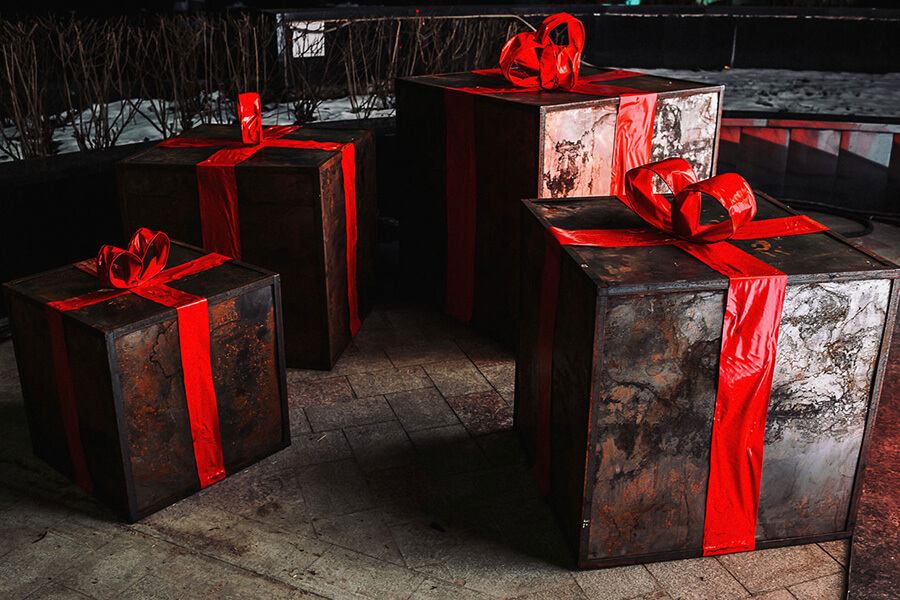
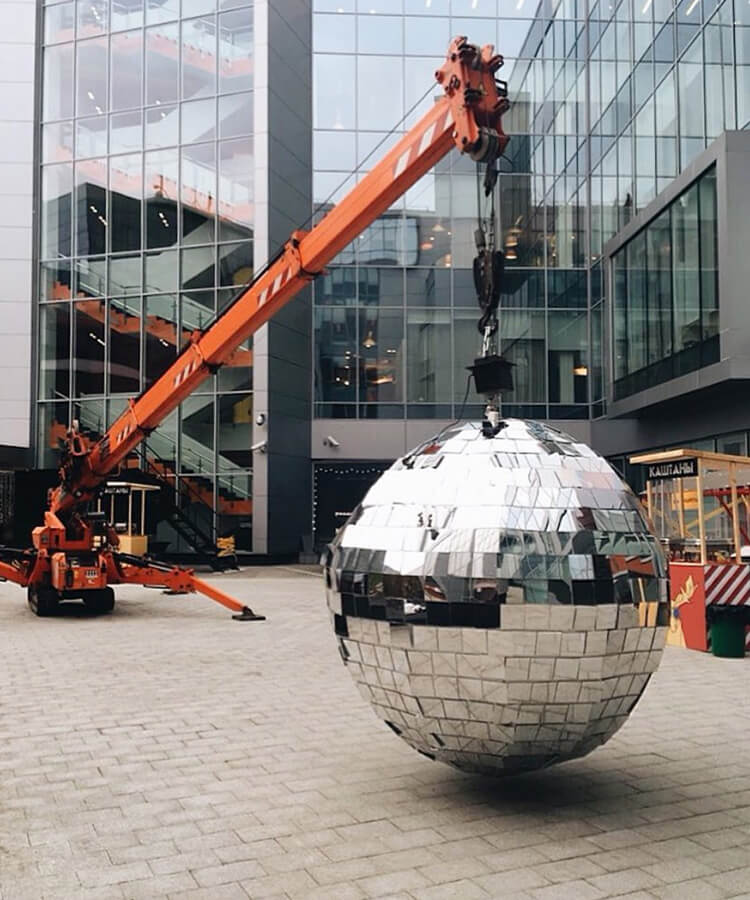
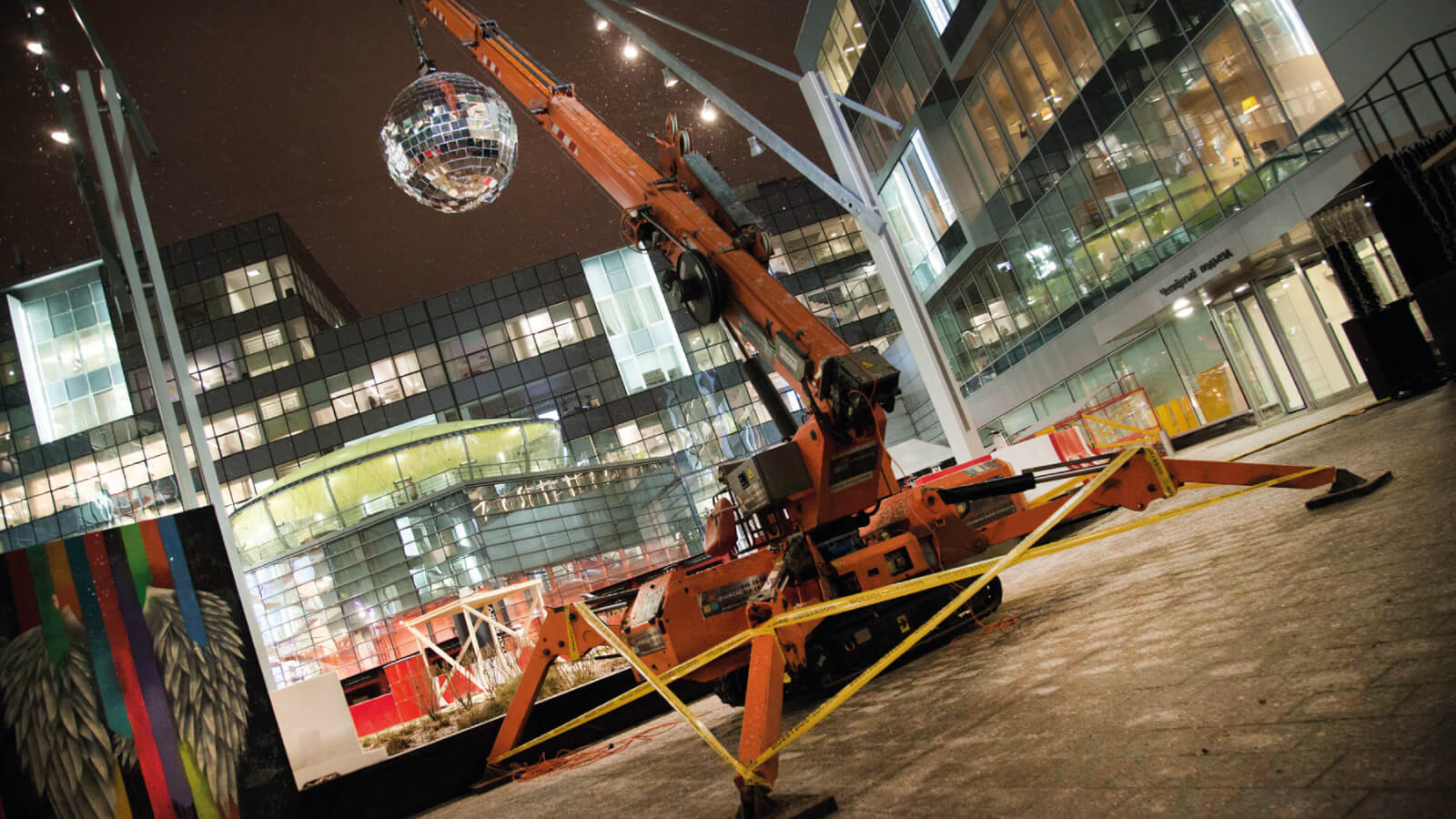
How could we exclude such a traditional thing from our party? We made a disco ball that was 2 m in diameter, covered it with thousands of glass pieces and sent it flying. Did you know that the world record for a disco ball is 10.33 m in diameter?
The construction crane helped us suspend this glittering monster up in the air.
Now imagine a myriad of mirror reflections about a meter big each, that were dancing across the walls, faces and paths under a frosty sky and in tune with rhythmic electro music.
Spray cans
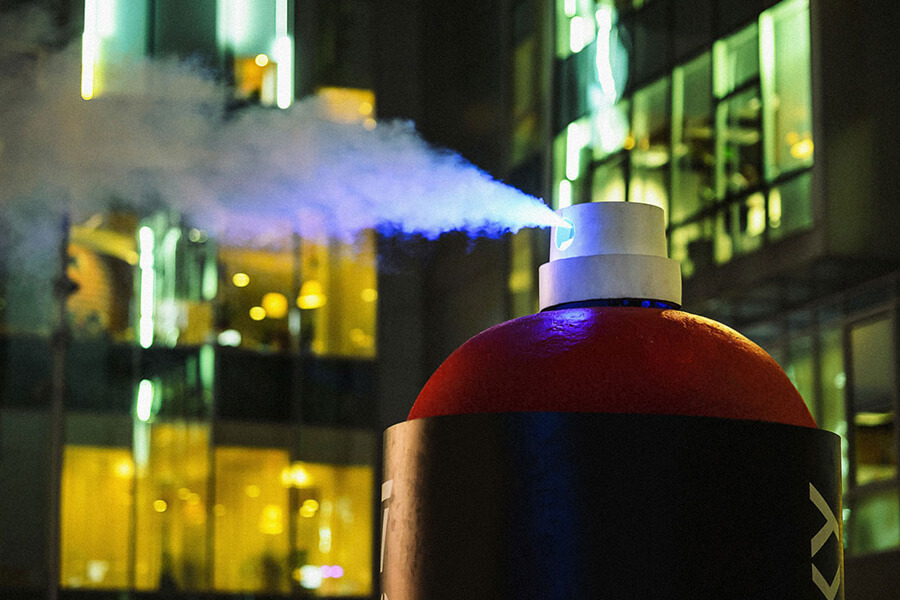
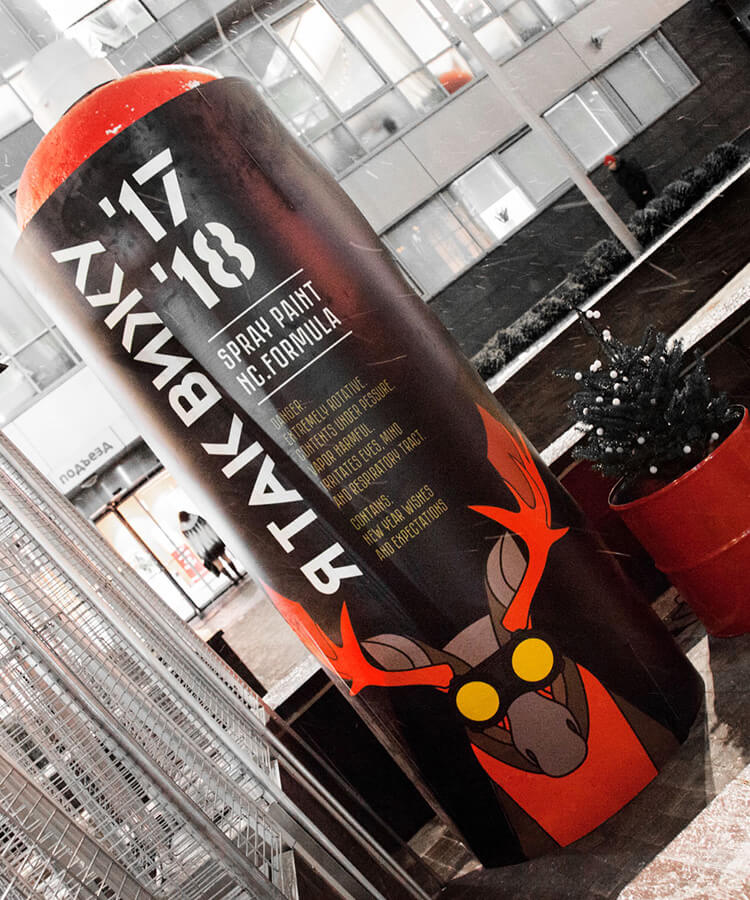
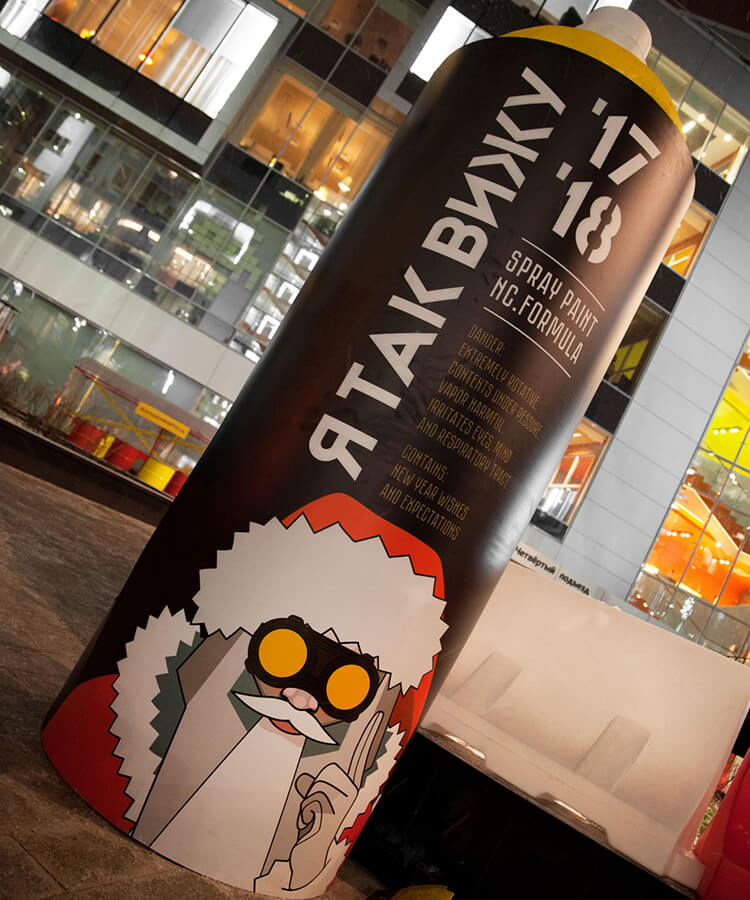
Spray paint can — one of the primary instruments of the street artist. We decided to pay a tribute to this symbolic object and created a couple of massive cans, slightly taller than human height (3 m).
Marina stylised can perimeter into Montana Cans appearance and added two key characters, an old gramps and a moose who lit the dancefloor.
Our engineers built a turning mechanism, a smoke machine and light elements into the base of the decorative cap. A combo of these elements helped us create an interesting effect: two massive spray cans spitting ‘paint’ over the dancefloor.
A TV screen pine tree
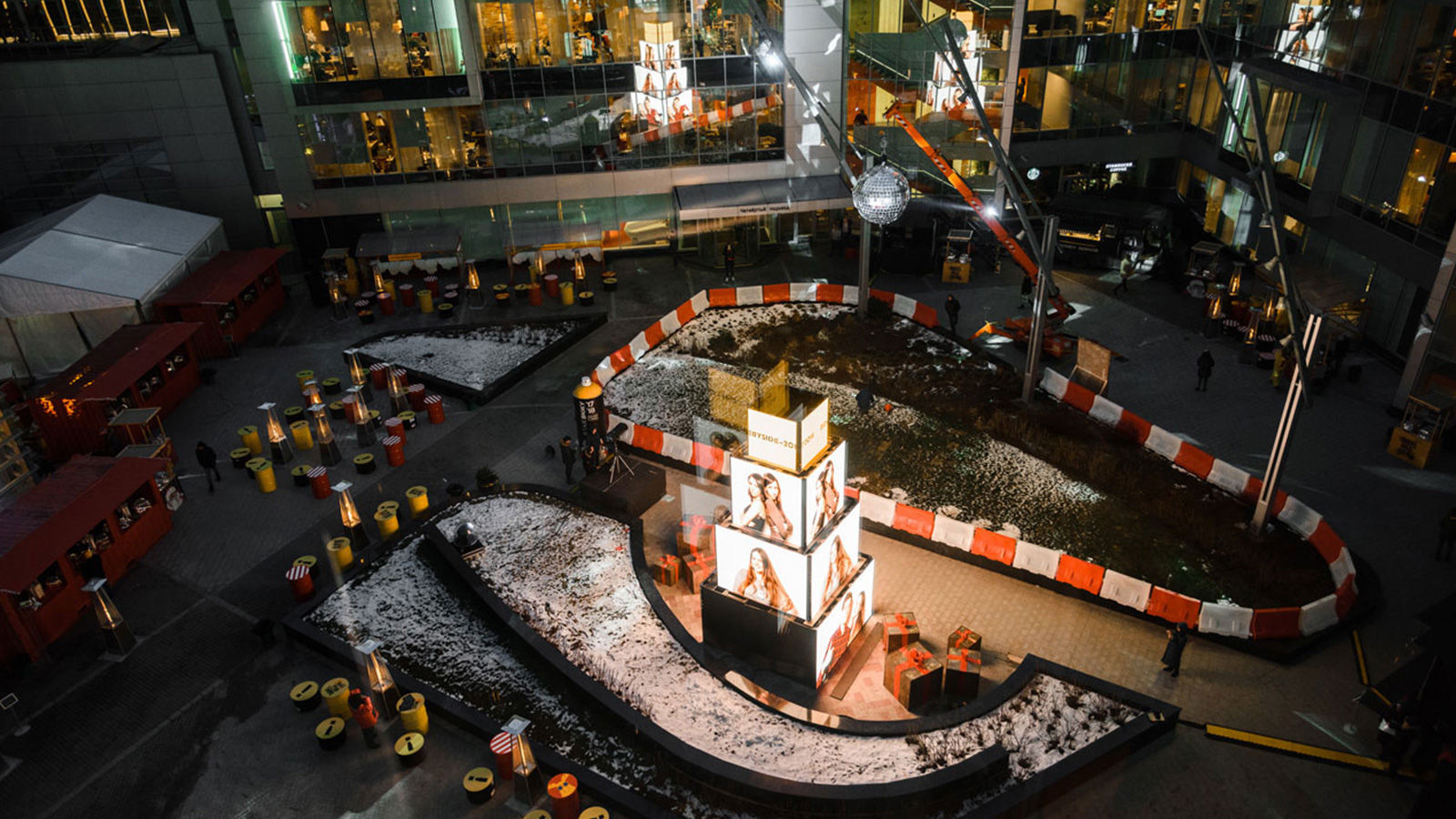
We constructed a multi-level geometric pine tree in the courtyard, using seamless LED panels.
We’ve also put a couple of welded metallic gifts, right out of the rough childhood.
The employees could take a picture in one of the booths, and photos would be displayed on the pine trees’ screens.
Containers
Metallic containers were first used for maritime shipping in the 1940s. It was a revolutionary solution that allowed loading and unloading of the complex cargo in one go, not en masse, how it was done traditionally. These days these containers are often reused for living, shopping, bars, they are used as large-format canvas and art objects.
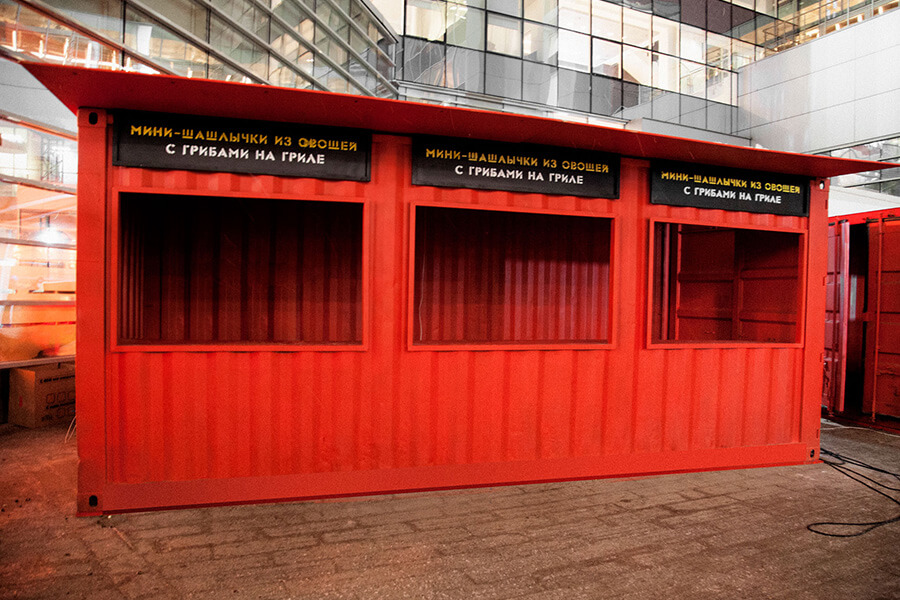
We used 5 and 20 feet containers to accommodate quite a few entertainment areas: photobooths, DJ decks, buffet lines.
We even took a trip to the cargo terminal where we chose the appropriate ones. Containers that we picked ended up going through a makeover: we cut windows and polished the edges of them, painted over them and installed canopies. Navigation signs and menu tablets completed up the atmosphere.
We have also discovered a new type of thrilling pleasure: unloading 3,5-tonne containers into the courtyard with a crane next to 1,5 m panoramic windows.
Painting
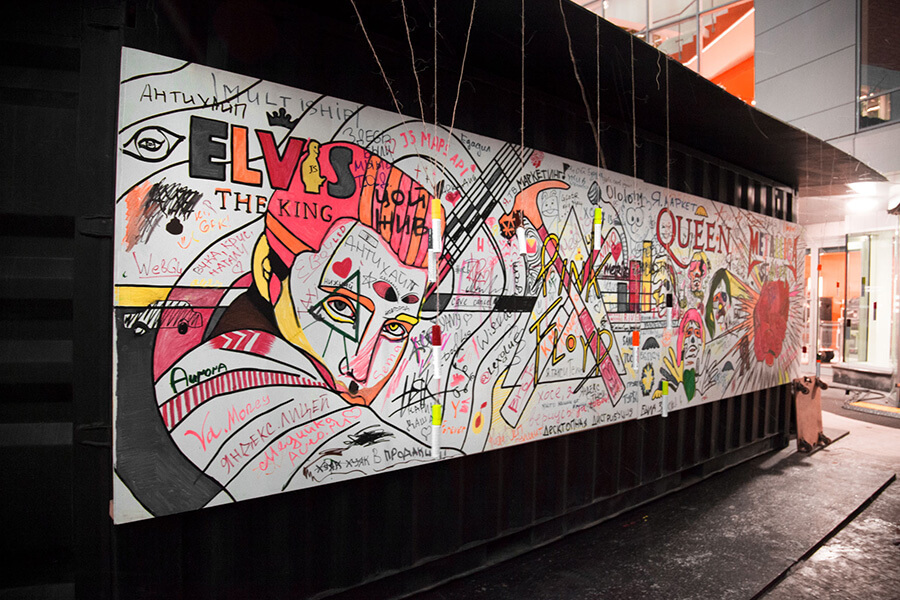
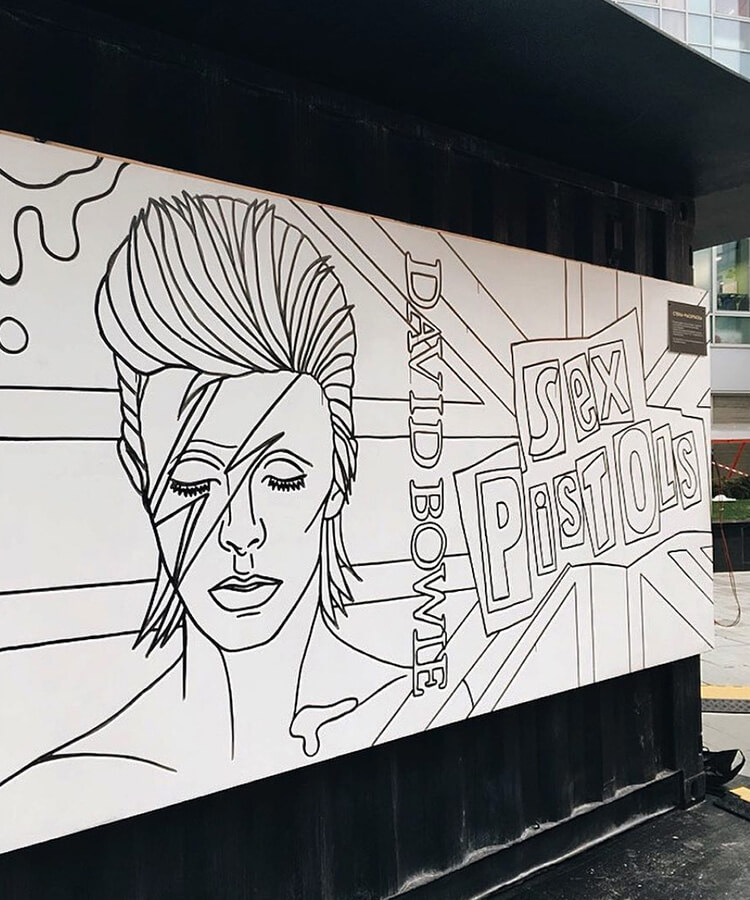
The outsides of the photo zone container were covered by painted panels. We used album covers of cult music artists of recent days as a base for our illustration. Of course, you know them! Do you feel these vibes? This rhythm that you want to drum with the palm of your hand on a thigh?
Graffiti culture has some unspoken rules, like ‘don’t paint over someone else’s work’. We decided to walk away from this rule and so we created a gigantic fill-in canvas for all the employees. We allowed them to create just by giving them a direction.
Everyone who wanted to add their colours into the composition and leave a message to their friends with help of cans and chalk markers.
Zaporozhets
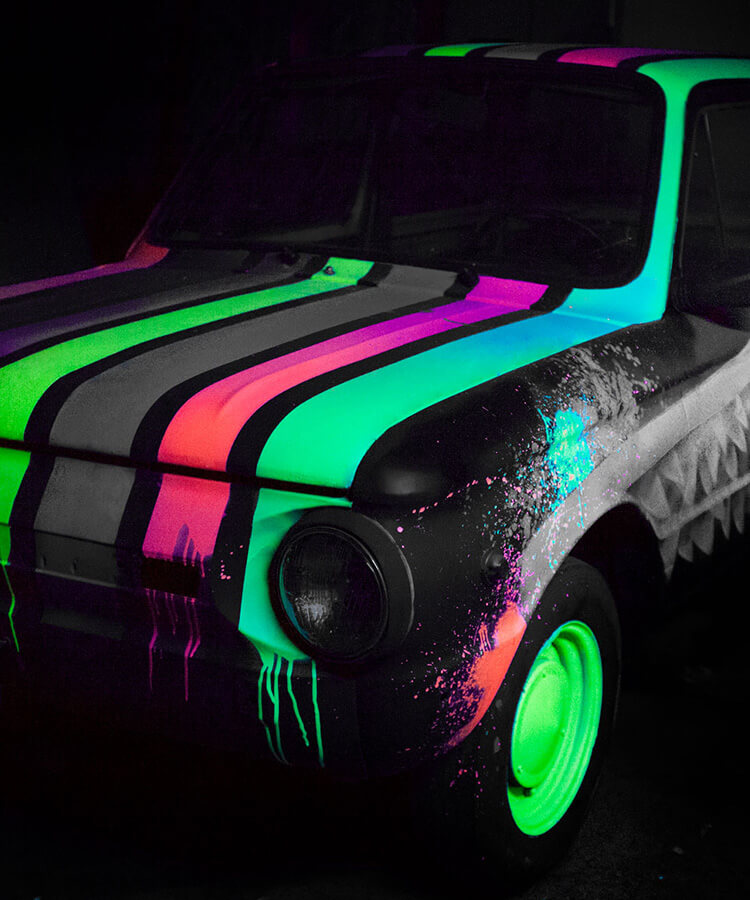
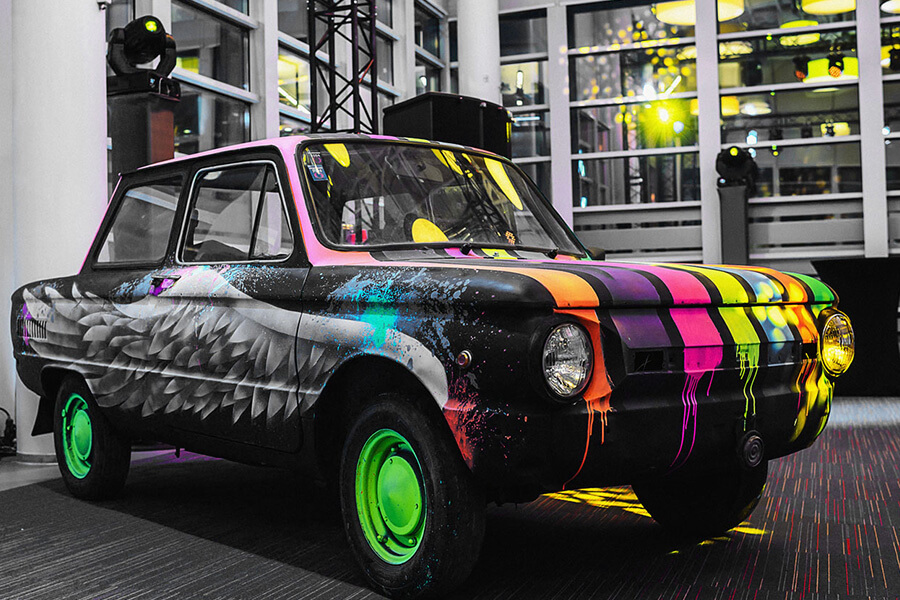
Our engineers and painters brought a classic soviet car (ZAZ 968) back to life. We covered its body with stylish wings and stripes. Fluorescent paints allowed a magic transformation of the car under UV lights.
An interesting fact: in order to put the car on-site, we had to push it through a door frame that barely had a 2 cm allowance on each side of the car. Felix (Aleksandr’s brother, a strongman and a champion) ended up lifting and dragging the vehicle inside on his own.
Seating and parking
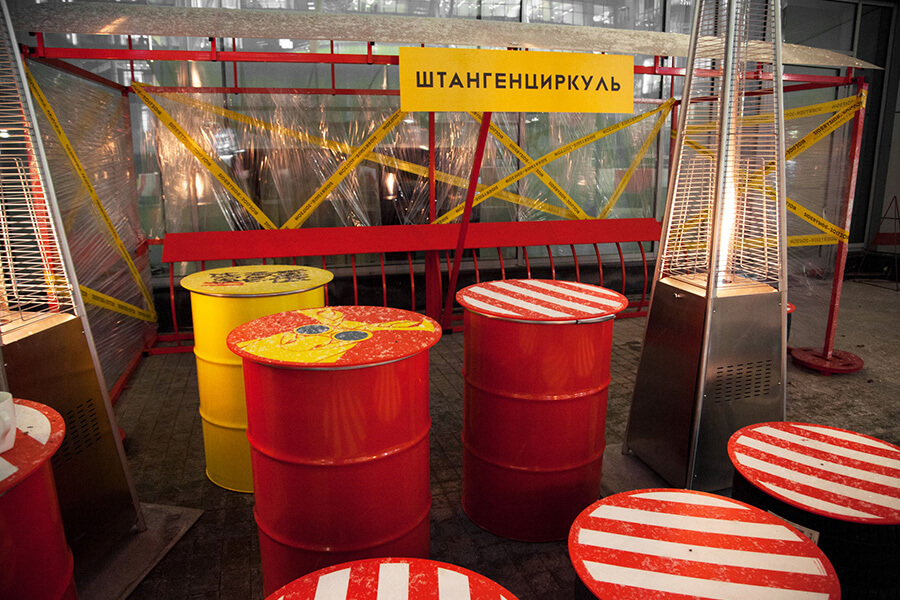
Even though the party was planned with a lot of human movement in mind, we still had to arrange at least minimal seating for the catering zones. We used barrels as bar tables and car wheels as stools, covering every item with stencil graphics.
Since we have already used up all the space allowance, it was decided to use 3 of the bike parking spaces in the office courtyard as lounge zones.
We covered the carcasses with stretch film, made and installed comfy seat pads, added some comfort by placing a few rugs and LED fairy lights.
Each of the parking spaces got a name to make navigation easier and to allow the visitors to set up meetings with their friends.
City rhythm
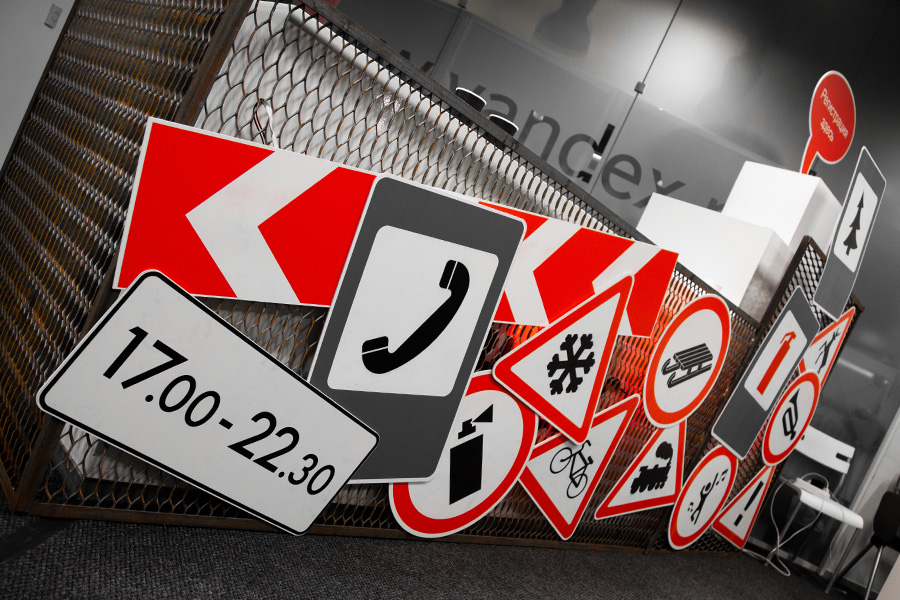
One of the halls was transformed from a familiar reception desk into a bar with street signs.
Our artists reworked standard road signs and added a few hooligan and festive elements. Engineers welded an urbanistic bar and decorated it with LED-lit signs.
Installation
It would be unrealistic to expect all these decorations to be installed within a limited space of a courtyard within one night, simply because of the scale of work to be done. We came up with a fun decision to stretch installation between 3 nights. At the end of every workday, each of the decorations was put off-limits with help of custom barricade tape. It had a single phrase: «processing might take some time». This way we managed to keep employees entertained as they watched new decorations popping up every day.

Production
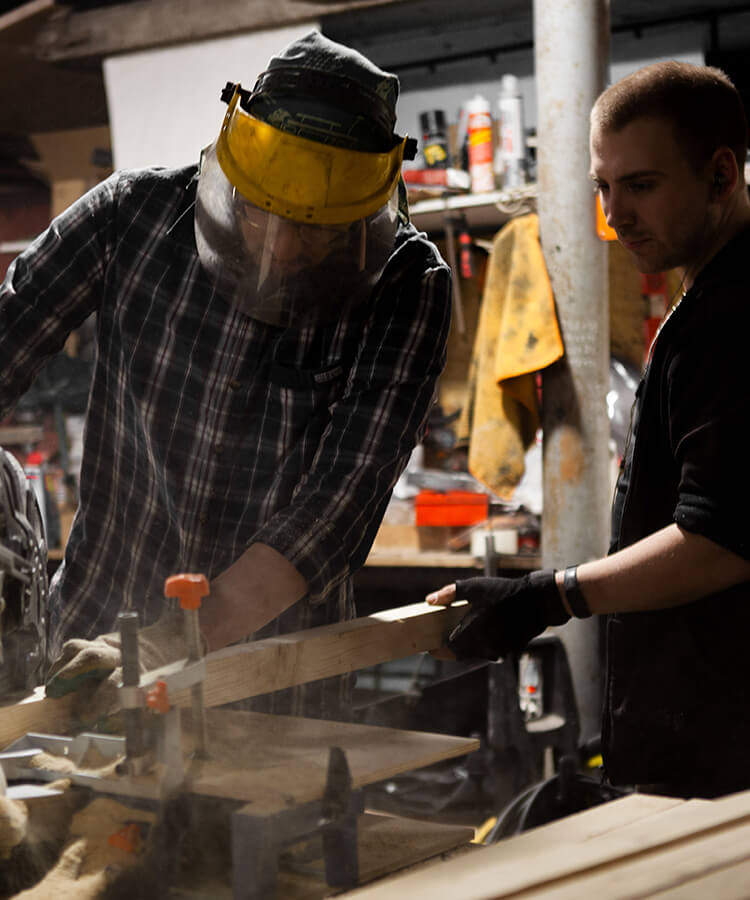
A classic tale, never gets old: we were left with only 11 days for production (instead of a calculated month) due to lengthy alignment of plans. We had to give up on one of the zones in the middle of work progress.
In addition, there was a small-scale fire outbreak at the power station and we were left without power for a whole day.
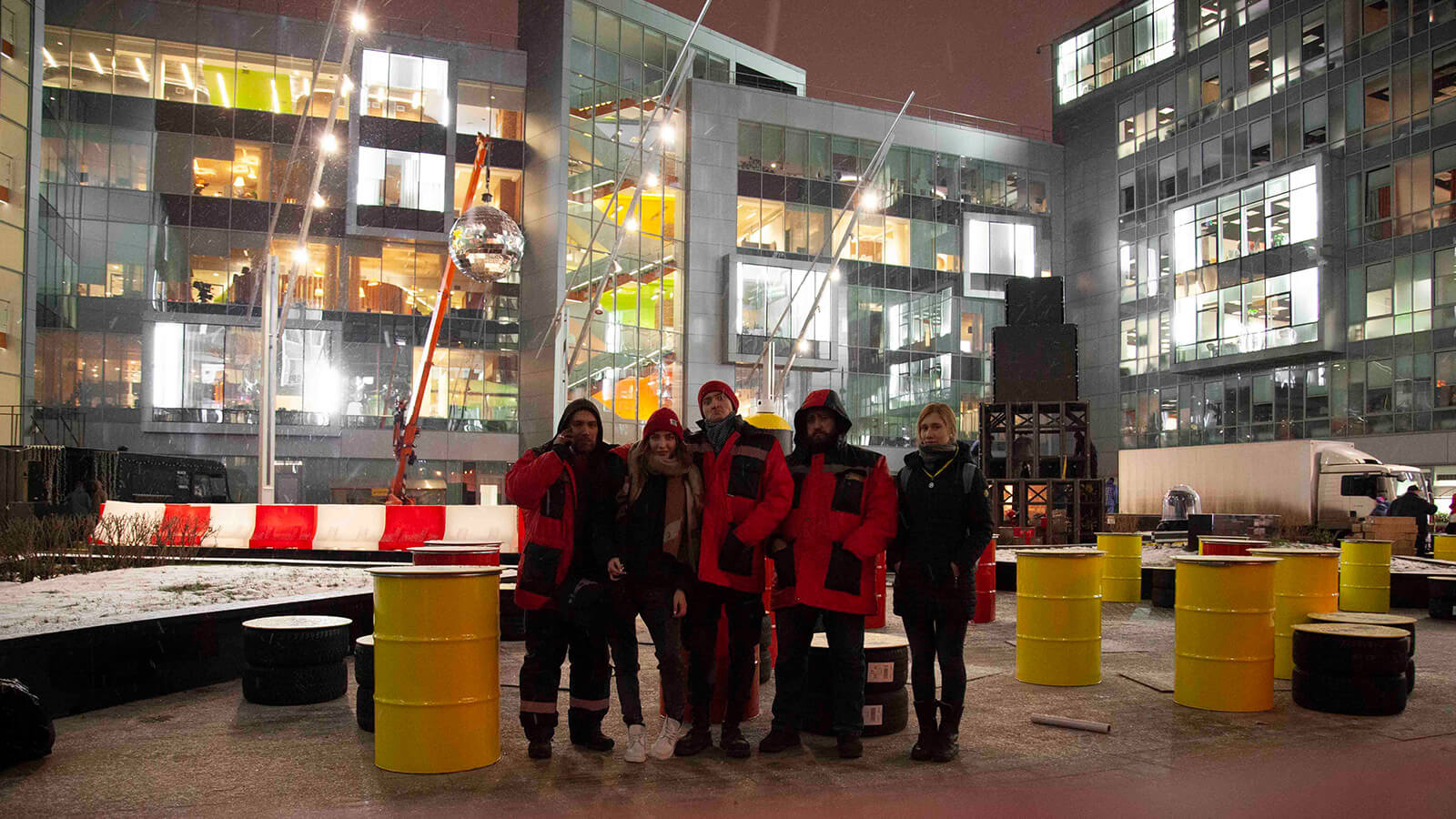
This project helped us set up a few new records in varied disciplines, such as number of days without sleep, number of decorations by the square foot, the tonnage of decorations and transportation, amount of coffee consumed and number of semi-alive bodies by the end of the project. (Note — records at that point of time)
We survived.